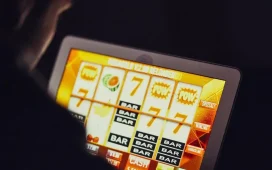


Paylines determine where matching symbols need to land for wins to register. Early machines featured single horizontal lines across the center row. Modern games evolved far beyond that simplicity, offering structures ranging from limited fixed lines to expansive reel systems. Payline calculations reflect stake allocation across active lines when configured around a slot bet 200. The variety lets developers create distinct mathematical models and visual presentations. This helps players anticipate potential wins across reels and recognize when combinations connect.
Traditional horizontal arrangements
- Classic three-reel games stuck with straightforward horizontal paylines. Online slot configurations in this style typically show one to five lines running straight across the reels at different vertical positions. The centre line remains most common, appearing in nearly every traditional design. Additional lines occupy positions directly above and below the centre when games include multiple paylines.
- Five-line setups on three-reel games use a predictable pattern. Line one crosses the middle row. There are two lines across each row. From top-left to bottom-right, lines four and five form diagonal patterns. This arrangement became so standard that players instinctively know where to look for wins on traditional-style games.
Diagonal pattern integration
Five-reel video games introduced more complex payline geometries. Diagonal lines started appearing in various configurations beyond the simple corner-to-corner patterns that classic games used. Each reel position may have a payline that zigzags across rows. The line might start middle-left, rise to top-center, rise again, then drop to bottom-middle. Visual interest is created by these irregular patterns. Watching wins form across unexpected pathways adds excitement compared to predictable straight lines. The patterns also let developers pack more paylines into single games without creating visual clutter. Twenty or thirty uniquely shaped lines can coexist on five reels, where that many straight horizontal lines would become incomprehensible.
Ways-to-win mechanics
A “ways to win” system replaces fixed paylines entirely in some modern games. A payout is triggered when matching symbols appear on adjacent reels. Three rows and five reels offer 243 ways to win. If symbols remain adjacent, they still count toward wins. The system dramatically increases winning frequency:
- Three reels with three rows each create 27 possible paths (3x3x3)
- Four reels expand possibilities to 81 paths (3x3x3x3)
- Five reels generate 243 distinct winning combinations (3x3x3x3x3)
- Games with four rows per reel offer 1024 ways (4x4x4x4x4)
- Six-reel configurations can reach 15,625 ways or higher
The mathematical explosion of possible winning combinations completely changes the gameplay feel compared to traditional payline structures.
Cluster pay systems
Cluster configurations require symbols touching rather than aligning across specific paths. Symbols that match horizontally or vertically win. A cluster requires five, six, or seven symbols if the rules allow it. Instead of paylines, proximity requirements replace them. Symbols landing anywhere on the grid can form clusters. A group of seven matching symbols touching in various configurations pays the same regardless of their specific positions. This creates significantly different strategic considerations compared to payline games, where symbol positions matter enormously.
All-ways-pay configurations
The most generous systems pay left-to-right AND right-to-left simultaneously. These bidirectional configurations double winning potential compared to standard left-to-right-only games. A matching sequence starting from the rightmost reel pays just as well as one beginning from the left. Some games extend this further by paying both directions plus centre-outward patterns, creating even more winning pathways from identical symbol arrangements. Each arrangement creates distinct gameplay characteristics affecting win frequency, payout distributions, and visual presentation.